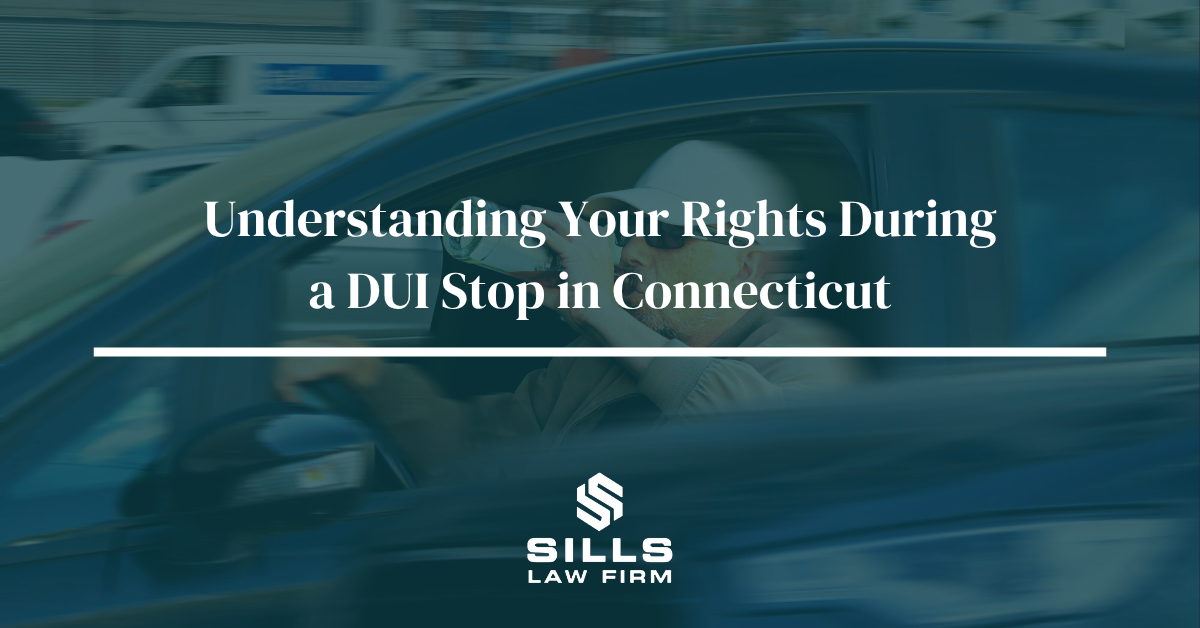
In Connecticut, driving under the influence (DUI) of alcohol and/or drugs is a crime. Specifically, it is illegal to drive with a blood alcohol concentration (BAC) of 0.08% or higher (0.02% if under 21) or if you are impaired by alcohol and/or drugs. If convicted, you could face serious consequences – including jail time.
This makes it all the more important to understand your rights if you are stopped on suspicion of driving under the influence. If you are stopped, you have the right to remain silent, to refuse a search, and to refuse to take both a field sobriety test and a pre-arrest breathalyzer test. You should remain calm and polite, but refuse to make any statement before you have talked to a Connecticut DUI defense lawyer.
At The Sills Law Firm, we are fierce advocates for clients who have been charged with a range of criminal offenses, including DUI. We take a proactive strategy to criminal defense, working hard to help our clients get the best possible outcome for the charges against them. Reach out to our law firm today to schedule a free consultation with a Connecticut criminal defense attorney.
What Are My Rights During a Connecticut DUI Stop?
If you are pulled over on suspicion of driving under the influence of alcohol and/or drugs, what you do during that stop can impact your case. In fact, it may even affect whether you are ultimately arrested for DUI.
You do have certain rights when it comes to DUI stops and other types of interactions with the police. Importantly, the police generally won’t tell you about these rights. Instead, they will often heavily imply that you have to comply with their requests or demands – even when the law is clear that you have the right to refuse certain things.
First, you have the right to remain silent. While you do have to identify yourself and provide your ID, you don’t have to offer any more information. For example, if the police officer asks you where you were or how much you had to drink, you don’t have to answer their questions.
Keep in mind that the police are asking you these questions to gather evidence. They are hoping that you’ll answer that you just left a bar or a party, or admit to just having a few beers. They are also looking to “detect an odor of alcohol” on your breath or to notice that your speech is slurred. You have every right to simply refuse (politely) to answer these questions.
Of course, this does not mean that you should be rude or disrespectful when exercising your right to remain silent. For better or for worse, the way that you act and how you treat the police during a DUI stop can affect the outcome of your case. Refuse to answer these types of questions or to give a statement, but do so politely.
Second, you have the right to refuse to consent to a search of yourself and your car. There are situations where the police can pat you down and/or search your car, such as if you are arrested or if they see something in plain sight. However, you never have to agree to a search.
Declining to allow the police to search you or your vehicle can also be important when it comes to your defense if you are charged with a DUI or another offense (such as drug possession). If the police didn’t have the legal right to perform the search, then your Connecticut criminal defense lawyer can ask to have the evidence gathered in an illegal search suppressed. This may result in a reduction or dismissal of charges.
Third, you have the right to refuse to perform field sobriety tests (FSTs) and to take a preliminary breath test (PBT) during a DUI stop. The police often will order you to perform field sobriety tests (like the walk and turn), giving you the impression that you don’t have the right to say no. You do have the right to refuse, and you should do so each and every time.
Doing FSTs will only hurt you. The police are not looking for signs that you’re sober. Instead, they’ll be watching like hawks for even the slightest sign that you might be intoxicated so that they can arrest you. Do not give them that opportunity.
You also have the right to refuse to take a roadside breathalyzer test. Connecticut does have an implied consent law, which means that by applying for a driver’s license, you consent to taking a chemical breath, blood, or urine test if you are arrested on suspicion of driving under the influence. If you refuse to take one of these tests after you are arrested, it is a separate administrative violation.
However, the implied consent law only applies to chemical tests after you are arrested. You are not legally required to take a breath test on the side of the road. Again, the only purpose of a PBT is for law enforcement to gather enough evidence to have probable cause to arrest you. Politely refuse to take a roadside breathalyzer.
If you are stopped for a DUI, you should otherwise follow the police officer’s lawful instructions and stay calm. Do not argue with the officer, act disrespectfully, or otherwise escalate the situation. You can and should advocate for yourself and your rights. However, you should always do so in a way that won’t make the situation worse.
If you are arrested for a DUI, stay calm and continue to refuse to give a statement. Instead, ask for a lawyer. Your attorney can advise you on the next steps and will get to work to protect your rights. Remember that if you have been arrested for a DUI, refusing to take a chemical blood, breath, or urine test will result in lengthier license suspension and requirement that you utilize an ignition interlock device “IID” for a longer period of time.
Our Connecticut DUI defense attorneys are adept at defending our clients against DUI and other criminal charges. We don’t wait for the prosecution to come to us. We start investigating your case immediately, working hard to build the strongest possible defense to the charges against you.
Whenever possible, we get the charges reduced or dismissed. If the prosecutor won’t offer a fair plea bargain, we will take your case to trial and ask the jury to return a not guilty verdict. Throughout the process, we will stand by your side and help you understand your rights.
Charged with a DUI? Give Our Law Offices a Call Today.
The things that you say and do during a DUI stop can impact the ultimate outcome of your case. While remaining calm and respectful, you should always exercise your right to remain silent, refuse a search, and not take FSTs and a PBT. Doing so may help you avoid being charged with a DUI at all and may help your defense if you are ultimately charged.
The Sills Law Firm understands that everyone makes mistakes, including getting behind the wheel after having a few drinks. If you have been charged with a DUI, you don’t simply have to plead guilty and accept the consequences. Our skilled Connecticut DUI defense lawyers will work hard to get you the best possible outcome for the charges against you.
To learn more or to schedule a free initial consultation with a Connecticut criminal defense attorney, give us a call at 860-524-8118 or fill out our online contact form.