Probation allows a person convicted of a crime in Connecticut to serve a criminal sentence in the community instead of in jail. While on probation, a person has to comply with certain court-ordered conditions. This may include things like regularly meeting with a probation officer, attending counseling, completing community service, paying restitution, avoiding certain people or places, and refraining from committing new crimes.
If law enforcement alleges that you violated probation, you might face additional restrictions, an extension of your probation, or even incarceration. The State has a much lower burden of proof during a probation violation hearing, which may result in a finding by the court that you violated probation. Our Connecticut criminal defense attorneys will fight to protect your rights and your freedom during a probation violation hearing in Hartford.
At the Sills Law Firm, we represent clients throughout Connecticut who have been charged with all types of criminal offenses. We will gather evidence to defend you at a probation violation hearing, including evidence to mitigate any possible consequences. Reach out to our law offices today to schedule a free consultation with a Hartford criminal defense lawyer.
What Is Considered a Probation Violation in Connecticut?
Probation is conditional freedom. When a Connecticut court sentences a person to probation instead of incarceration, it establishes conditions that they must follow while on probation. Courts can impose these conditions based on the offense, the individual’s circumstances, and the goals of supervision and rehabilitation.
If a person allegedly fails to comply with one or more of these conditions, it is considered a probation violation. Common examples of probation violations include:
- Failing to report to a probation officer: Missing required appointments or failing to maintain contact as directed.
- Committing a new offense: Being accused of or arrested for another crime while on probation.
- Failing a drug or alcohol test: Violating a condition requiring abstinence from drugs and/or alcohol or complying with substance testing.
- Missing required counseling: Failing to attend court-ordered programs or comply with treatment requirements.
- Not completing community service: Failing to perform the required hours within the specified timeframe.
- Failing to pay restitution or other court-ordered obligations: Not making required payments.
- Violating travel or contract restrictions: Leaving an approved area without permission or contacting someone the court has prohibited you from contacting.
Keep in mind that while certain probation conditions are standard, the specific conditions set out in your probation order matter. Conduct that violates one person’s probation may not violate another person’s order.
A probation violation case typically begins when a probation officer believes that you failed to comply with one or more conditions of your supervision. Depending on the circumstances, the court may issue a warrant for your arrest or a notice requiring you to appear and answer the allegation.
It’s also important to note that an allegation of a probation violation is not proven. A probation officer’s report or an arrest may initiate proceedings, but a court must ultimately find that a person violated probation before imposing sanctions.
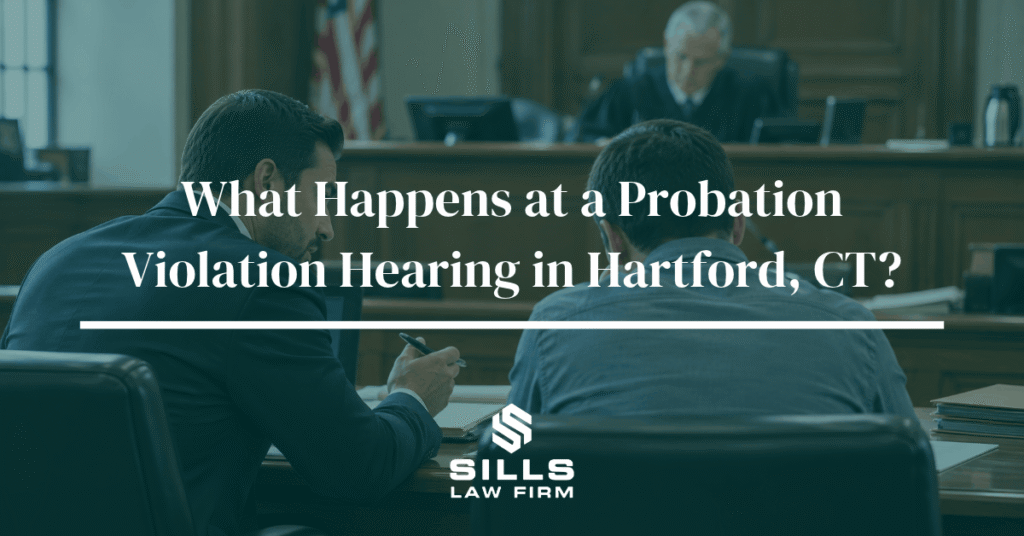
What Happens at a Probation Violation Hearing?
A probation violation hearing isn’t the same as a criminal trial for a new charge. During a probation violation hearing, the court will determine whether you violated an existing condition of probation. If so, the court will then determine what consequences are appropriate.
A probation violation hearing in Hartford, Connecticut involves two stages:
- Did a Violation Occur? The court evaluates the alleged violation. The State must establish that the violation occurred by a preponderance of the evidence. This is a lower standard of proof than the beyond-a-reasonable-doubt standard used to determine guilt in a criminal prosecution. Essentially, the court must determine whether the evidence shows that it is more likely than not that a condition of probation was violated. The evidence in the hearing may include testimony from a probation officer, police officer, treatment provider, or another witness. Depending on the allegation, the court may also consider other documentation, such as drug test results, attendance reports, or payment histories. For example, consider a situation where you are accused of missing several required appointments with your probation officer. The State may present attendance records and testimony from your probation officer. Your Connecticut criminal defense lawyer may offer evidence to show that you notified the officer about an emergency, attempted to reschedule, or had another legitimate explanation for the missed appointments. The outcome of the hearing will depend on the evidence and the specific probation condition at issue.
- If Probation Was Violated, What Is the Appropriate Consequence? If the court finds that a violation occurred, it then considers what should happen to your probation. This second stage is important because establishing a violation does not necessarily mean that you will go to jail. The court must fully consider the record and determine the appropriate consequence under Connecticut law. Your attorney may present evidence about your compliance history, employment, family responsibilities, treatment progress, and other circumstances relevant to the court’s decision.
It is important to understand that there is a difference between the two stages. A court won’t move to the second stage unless it finds that a violation did occur. A Connecticut criminal defense attorney may challenge whether the alleged violation occurred at the initial stage, and then focus on an argument that continued probation would be an appropriate outcome if the court finds a violation.
Unless there is good cause, probation violation charges must either be disposed of or scheduled for a hearing no later than 120 days after arraignment on the violation. There is a shorter 60-day deadline for certain serious cases related to firearms.
What Rights Do You Have at a Probation Violation Hearing?
Even if you are accused of violating probation, you still have a right to a fair hearing. Under Connecticut law, you have several important protections:
- The right to know the allegations: You must be informed of how you allegedly violated your probation conditions so that you can prepare a response.
- The right to legal counsel: You have the right to retain an attorney. If you can’t afford to pay for a lawyer, you are entitled to the services of the public defender.
- The right to cross-examine witnesses: You can challenge testimony offered against you through cross-examination.
- The right to present evidence: You may introduce relevant evidence on your own behalf.
These protections can be particularly important when the allegations depend on disputed facts. For instance, a probation officer’s account of a missed appointment may not tell the whole story if there were communication problems or an emergency. A skilled Connecticut criminal defense attorney can review the allegations, identify weaknesses in the evidence, prepare witnesses, and determine which arguments may be appropriate under the circumstances.
What Penalties Can You Face for Violating Probation?
The consequences of a probation violation depend on the nature of the violation, the original sentence, your compliance history, and other relevant circumstances. If a court determines that a probation violation occurred, it may go with one of several options, including:
- Continuing probation: You will remain on probation under the existing conditions.
- Modifying probation conditions: The court changes existing requirements or imposes additional conditions.
- Extending probation: The court extends the period of probation, subject to statutory limits.
- Revoking probation: The court ends probation, and the previously suspended sentence is imposed.
If probation is revoked, the court will either require you to serve the sentence previously imposed or may impose a lesser sentence authorized by law. A lesser sentence may include incarceration followed by a new period of probation.
In some situations, such as violations related to firearms, the court may be required to revoke probation. For other violations, the court may have discretion to impose lesser consequences, such as continuing probation.
There are several factors that can influence the court’s decision on the consequences of a probation violation. This can include the nature and seriousness of the violation, the circumstances surrounding the violation, your prior compliance, and the broader record in your case.
A Connecticut criminal defense lawyer can introduce evidence that can result in a more favorable outcome, such as:
- A history of complying with probation requirements
- Documentation of employment or education commitments
- Proof of participation in counseling or treatment
- Evidence that missed payments resulted from financial hardship
- Records that show efforts to correct a violation
- A plan for addressing circumstances that led to the alleged violation
This type of evidence can be helpful, but it won’t necessarily lead to a particular result. However, presenting a clear, documented account of your circumstances can help a court evaluate whether additional supervision or modified conditions of probation would be appropriate. Our Connecticut criminal defense attorneys will work to present mitigating evidence to help you achieve the best possible outcome.
What Should You Do Before Your Probation Violation Hearing?
If you have been accused of violating probation in Hartford, taking practical steps early can help you prepare for the hearing. This can include doing the following:
- Contact a criminal defense attorney. Do not wait until the hearing date to seek legal guidance. An attorney can review the allegation, explain your rights, and help you prepare.
- Review your probation conditions. Obtain a copy of your probation order and identify the specific requirement you are accused of violating.
- Preserve relevant documents. Keep appointment confirmations, emails, text messages, treatment records, payment receipts, employment records, and other information that may help explain what happened.
- Continue complying with your conditions. Unless the court changes your requirements, continue following all applicable probation conditions. Do not assume that an alleged violation gives you permission to stop reporting, attending treatment, or meeting other obligations under your probation order.
- Avoid discussing the case. Be cautious about making statements concerning the allegations to the police, your probation officer, or other people.
- Be prepared to explain the circumstances. If there was a specific issue, such as a transportation problem, that contributed to the alleged violation, gather documentation that supports your explanation.
A probation violation can have consequences that extend beyond the immediate hearing. Depending on the original offense and the sentence, a finding of a violation could result in incarceration, additional restrictions, or a longer period of court supervision. Having a lawyer can ensure that the allegation is carefully evaluated and that the court hears relevant evidence about your circumstances.
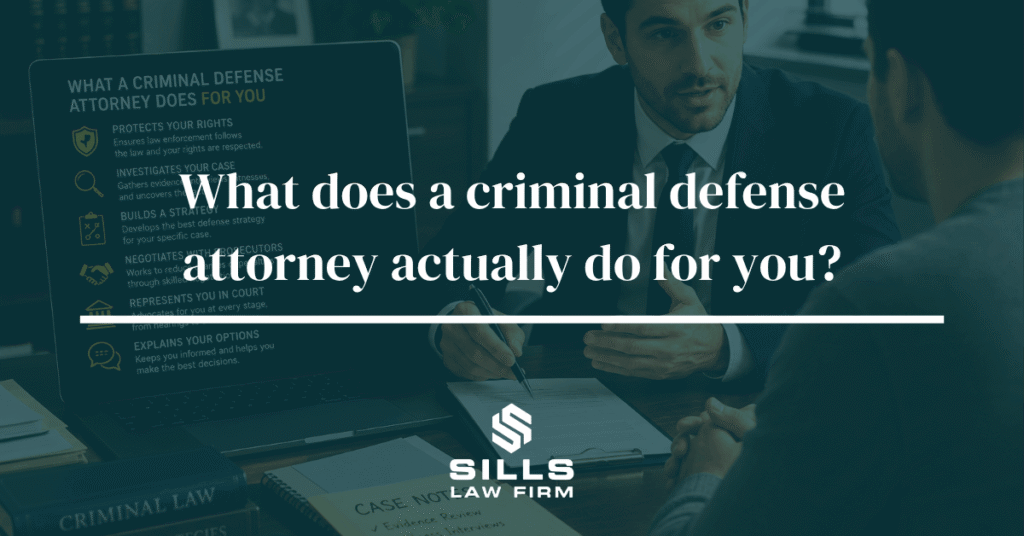
A defense attorney can examine whether the alleged conduct actually violated a condition of probation. A lawyer can also challenge unreliable evidence, cross-examine witnesses, and present information to support a more favorable outcome. Your attorney can also explain the potential consequences of admitting a violation compared to contesting the allegation.
Charged with a Probation Violation? Talk to The Sills Law Firm Today.
If you are facing a probation violation hearing in Hartford, Connecticut, it is important to understand what is at stake and what options may be available to you. A finding that you violated probation can put your freedom at risk, but an allegation is just that. Our Connecticut criminal lawyers can advocate for your interests and help you get a better outcome.
The Sills Law Firm can help you understand the probation violation process, evaluate the circumstances of your case, and prepare for the next steps. Whether you are accused of missing appointments, failing to complete a court-ordered program, violating a restriction, or committing a new offense, we can help you make a more informed decision about how to move forward. To learn more or to schedule a free initial consultation with a Connecticut criminal defense attorney, call our law offices at 866-971-5795 or fill out our online contact form.